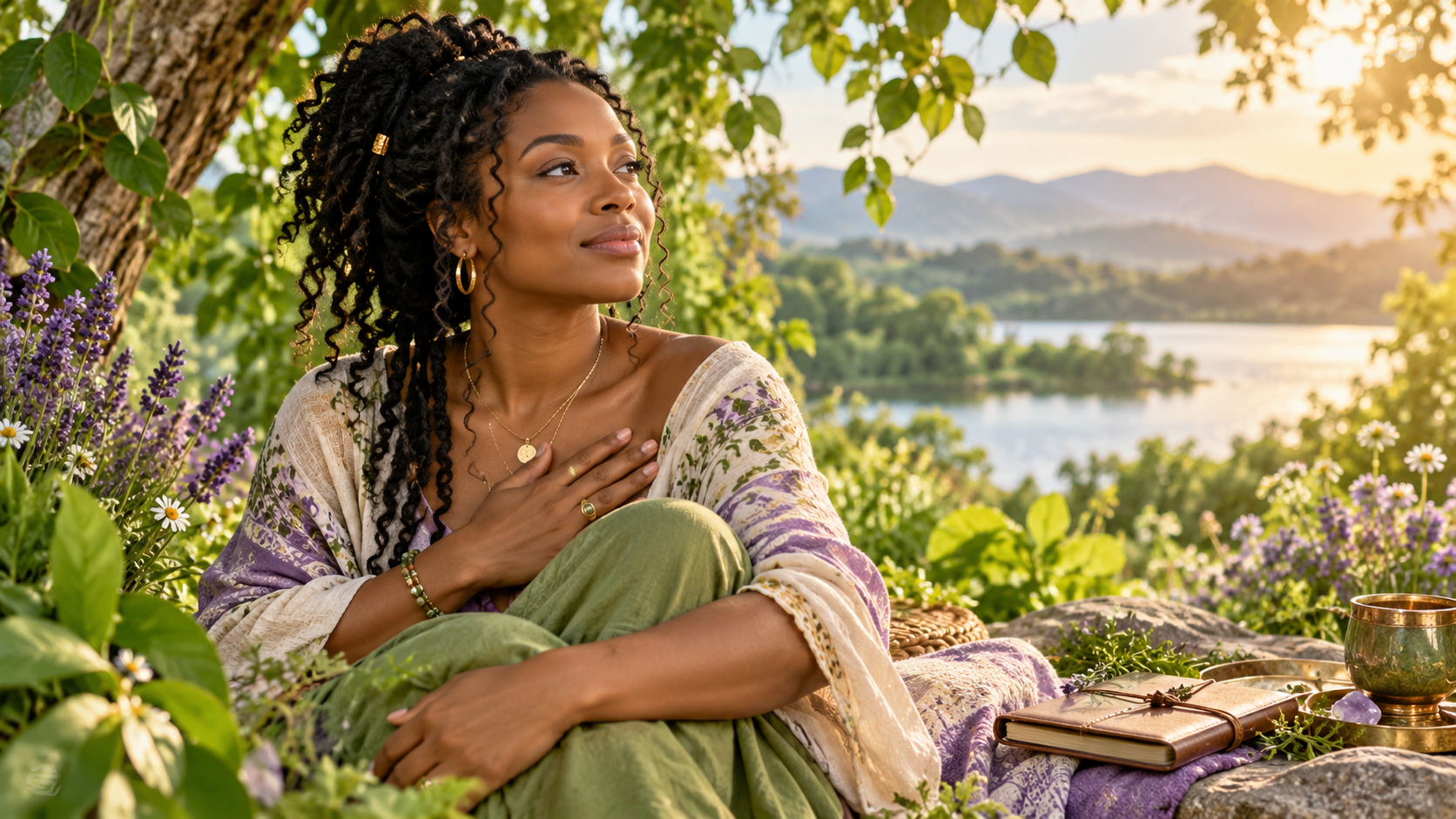
🌿 Self-awareness • Original beauty • Personal growth
Where to Begin When You Want to Notice Your Original Beauty
A gentle how-to guide to seeing your original beauty from the inside out—and learning why your differences may belong in the picture.
A personal reflection by Netta Vibes Netta Reads
Start With the Beauty You Already Live With
Whenever we talk about beauty, it is easy to begin with what other people can see. A compliment can make us feel admired, loved, encouraged, or simply noticed. I appreciate those moments. But I also want to ask a different question: What do I notice about myself when no one is there to compliment me?
For me, original beauty begins with that inward question. It might be the kindness in my thoughts, the warmth in my voice, the way I listen, or the quiet determination that helps me begin again. It could be something as simple as feeling grateful for the body that carries me through another day.
I believe that anytime we take a step inward with honest attention, we also give ourselves a chance to step up. We are not trying to invent a more acceptable person. We are learning to recognize the person already here.
A small beginning: Think of one quality about yourself that has brought even a little joy into an ordinary day. It does not need to impress anyone. It only needs to be true to you.
What the Beauty You Notice May Reveal About You
We live in a world of images. On social media, in advertisements, and across the web, we encounter countless ideas of what beauty should look like. Sometimes we find those images inspiring. Other times, we begin to compare our appearance, our age, our skin, our hair, or our shape with someone else’s.
Here is the perspective I want to offer: your ability to recognize beauty is already a meaningful part of your inner life. When you appreciate a beautiful tree, someone’s smile, a peaceful voice, or the changing colors of nature, you are bringing your own attention, imagination, memories, and sensitivity to that experience.
That does not mean you must look like the person you admire. It does not mean beauty is a competition. To me, it means that your way of noticing matters. Rather than using another person’s beauty as evidence against yourself, you can let it remind you that there are many ways to be beautiful—including your own.
“The beauty I recognize in the world does not ask me to disappear from my own picture.”— Netta Reece
What If a Flaw Is Part of Your Original Beauty?
Many of us grow up hearing that a flaw is something to cover, correct, or overcome. It might be a scar, an unusual feature, a difference in how we speak, a hair texture, or a part of the body we have learned to judge. Sometimes one painful comment follows us for years.
But what if we make room for another way of looking? A scar may hold a story. A distinctive feature can be part of the face that family and friends know so well. A difference can become familiar, expressive, and unmistakably ours.
I am not saying that anyone must love every feature every day, or that every painful experience has a hidden gift. I am saying that we do not have to turn a difference into a verdict about our worth. We can choose curiosity before criticism. We can let our understanding grow.
“Sometimes the feature we call a flaw is not the end of our beauty. It is one of the details that makes our beauty original.”— Netta Reece
Our original beauty does not need to be flawless to be real. It can hold strength, tenderness, change, humor, spirit, and the experiences that shape who we are.
How to Begin Noticing Your Original Beauty
- Name something you like. It could be your laugh, your patience, your creativity, your voice, or the way you help someone feel heard.
- Choose one feature you have judged. Without forcing yourself to love it, try describing it without an insult. “This is part of how I look” can be a beginning.
- Notice how you recognize beauty elsewhere. The next time a person, plant, or place catches your attention, ask: “What quality am I responding to?”
- Bring that care inward. Can you offer yourself even a small portion of the patience or appreciation you give to others?
- Write one original sentence. Complete this thought: “Something beautiful about the way I am becoming myself is…”
You do not have to complete these steps perfectly. You may feel confident today and uncertain tomorrow. That does not erase your progress. Confidence is something we can practice, not a prize reserved for people who never doubt themselves.
Self-Identification: Let Your Own Voice Be Part of the Answer
One reason self-identification matters to me is that other people can describe us without knowing the whole person. They may see our appearance, but not our intentions, imagination, history, or capacity to grow. Their opinions might influence us, yet they do not have to become our entire definition.
I want beauty to include our emotional life, our way of thinking, and—if it is meaningful to us—our spiritual sense of connection. I want room for someone who is changing their weight, beginning a new chapter, healing from childhood criticism, or simply trying to become kinder toward their reflection.
You are allowed to identify what is beautiful about being you. You are also allowed to change your answer as you grow. Nature changes every day; we do too. Original beauty can be recognized in that ongoing process, not only in a finished image.
Five Questions Worth Asking After You Read
These are questions that may not come up when we talk about beauty on the surface, but they deserve a little space.
1. What if I cannot name a single beautiful thing about myself today?
Begin with something neutral rather than a compliment. Maybe your hands prepared a meal, your mind solved a problem, or you made it through a difficult day. Respect can come before admiration. You do not have to manufacture a feeling.
2. Does appreciating someone else’s beauty mean I lack something?
No. Appreciation and comparison are not the same thing. You can admire someone else’s appearance or presence without treating it as a measure of your own worth. Let admiration expand your view of beauty rather than narrow it.
3. Can a scar, difference, or feature I dislike really be part of my beauty?
It can be, if that interpretation feels meaningful to you. You are not required to celebrate every feature. But you can stop treating a difference as proof that you are less deserving of care, confidence, or belonging.
4. What if words from childhood still shape how I see myself?
Old criticism can become familiar, even when it is unfair. Try separating what someone said from what you know about yourself today. Reflection, supportive relationships, and, when needed, a qualified counselor can help you explore that history without rushing your healing.
5. Is original beauty only about appearance or feeling confident?
Not in the way I am describing it. Original beauty can include character, compassion, purpose, emotional honesty, imagination, and the ways we relate to the world. Confidence may grow from noticing these qualities, but your worth does not depend on feeling confident all the time.
A Closing Thought: Return to Your Own Reflection
My hope is that you leave this reading with one gentle possibility: perhaps there is more beauty in you than your usual way of looking has allowed you to notice. Not because you must be perfect. Not because someone else has approved of you. But because your original life, your awareness, and the qualities you bring into the world deserve your attention too.
Begin inside. Look with curiosity. Make room for what is uniquely yours. And remember that you can learn something new about yourself every day.
[voice_review_recorder] and [voice_reviews]Kind words, real voices
Reviewed and approved by this community's moderators.
No published reviews yet. Your story could be the first.