The beginner-friendly entrepreneurship guide · 80 practical ideas
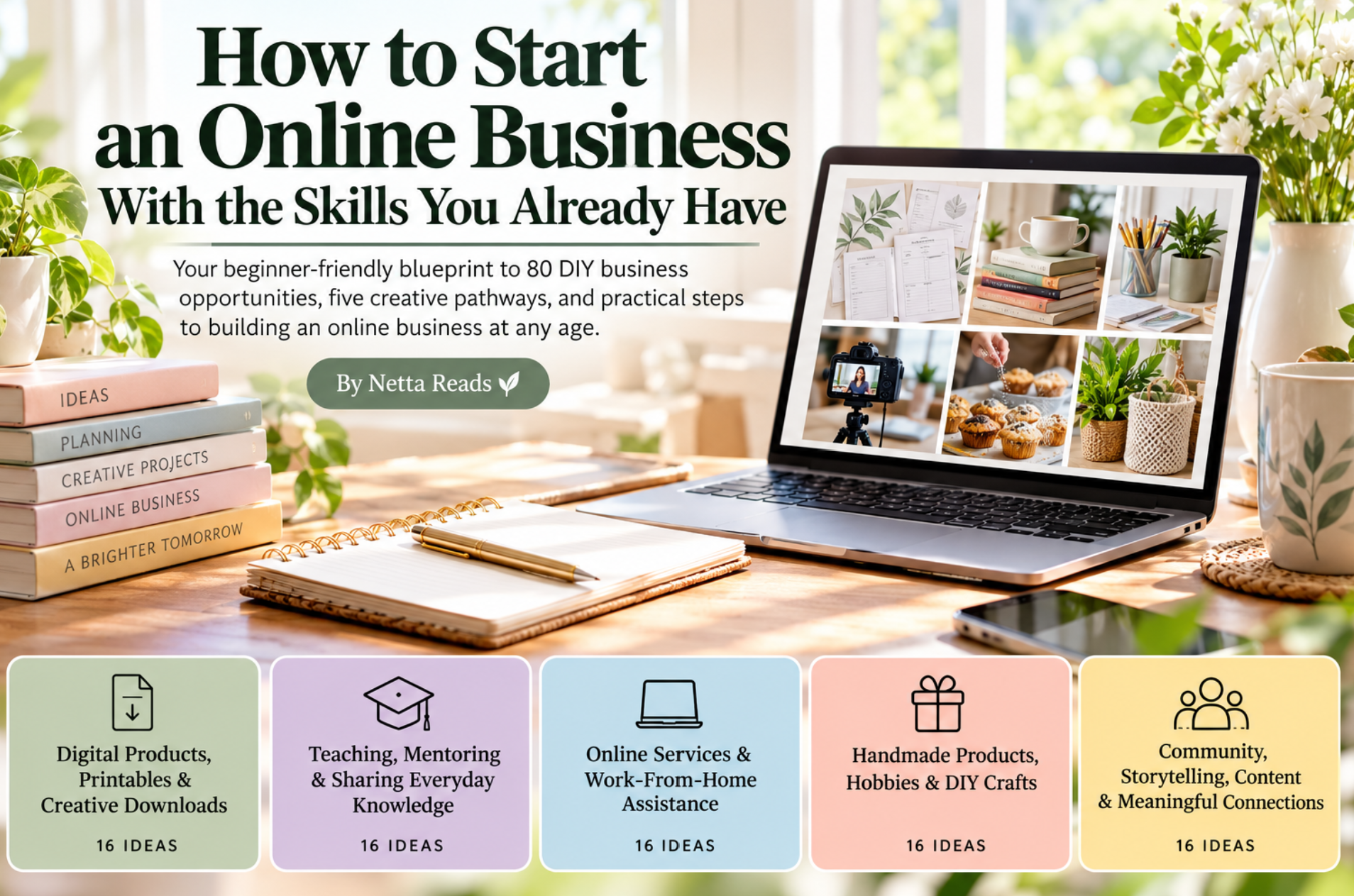
How to Start an Online Business With the Skills You Already Have
Your beginner-friendly blueprint to 80 DIY business opportunities, five creative pathways, and practical steps to building an online business at your own pace—at any stage of life.
How to use this guide
- Read at your own pace. Open Jump to a section to navigate without scrolling through everything.
- Tap Save idea beside any business idea, or Save key point after a section. You can also select a passage and tap Save selected passage.
- Find your highlights in My Reading Notes at the bottom. Add personal notes, print them, or download a copy.
- Choose an easy-on-the-eyes text size or a gentle background pattern below. Your reading notes and preferences are saved on this device when browser storage is available.
Pattern choices affect only the softly highlighted sections, keeping the rest of the article clean and readable. Notes stay in this browser, not in a website account. Download a backup to move them to another device.
What If the Skills You Already Have Could Become Your Next Opportunity?
↑ TopYou don’t have to be a technology expert, a professional website designer, or someone with thousands of dollars saved to begin exploring online entrepreneurship.
Sometimes your most valuable starting point is something you already know.
Perhaps you enjoy writing, cooking, gardening, crafting, organizing, teaching, or helping other people solve everyday problems.
Maybe you have spent years developing skills through your career, raising a family, managing a household, volunteering, or simply enjoying a hobby.
Those experiences can have value beyond the setting where you originally developed them.
One of the most meaningful aspects of the online environment is that it offers people room to build something that reflects their interests, knowledge, and personal goals.
You can begin small, explore different opportunities, and gradually develop a platform around the things you genuinely enjoy.
And these opportunities aren’t limited to one generation.
A young adult exploring their first business idea, a parent looking for flexible work, someone changing careers, and a retired professional wanting to share a lifetime of experience can all find meaningful ways to participate.
Online entrepreneurship can provide opportunities for income, personal growth, creativity, and community contribution.
However, running a business also requires financial planning, consistency, responsible decisions, and a willingness to learn.
The purpose of this guide is to introduce practical ways to begin without creating unnecessary financial pressure.
First, Discover What You Already Have to Offer
↑ TopBefore searching for a business idea, ask yourself a few questions.
What do I enjoy doing? What problems do I know how to solve? What have I learned through my personal or professional experiences? What would I enjoy teaching or sharing with someone else?
The answers may reveal an opportunity you have overlooked.
Someone who enjoys creating greeting cards may discover a market for personalized stationery.
A person who has spent years managing office paperwork might provide remote administrative assistance.
A retired gardener could create seasonal planting guides.
A parent who enjoys organizing household finances might develop practical budgeting worksheets.
Your first business idea does not need to be revolutionary.
It should begin with something useful that you can realistically create, deliver, or help someone accomplish.
80 DIY Online Business Ideas: Five Categories to Explore
↑ TopThe following 80 opportunities are organized into five categories. Each one includes a straightforward way to begin.
You can explore many of these ideas with a smartphone, basic computer, free design tools, or supplies you already own.
Some require additional training, equipment, startup costs, or compliance with local business regulations. Not every idea will suit every person, and minors may need parental assistance to establish accounts or conduct transactions.
The goal is not to encourage you to launch every idea.
It is to help you discover one opportunity that connects with your abilities, interests, lifestyle, and financial circumstances.
Search all 80 ideas. You can save individual ideas to your notes below.
Showing all 80 ideas.
Digital Products, Printables, and Creative Downloads
16 DIY ideas for turning your creativity and everyday knowledge into downloadable products.
Digital products can be particularly attractive because you can create a file once and offer it to multiple customers. However, they still require design, quality control, customer support, and ongoing marketing.
- Printable Budget Planners: Create simple monthly worksheets that help people track bills, spending, and savings goals. Start with one clearly designed PDF.
- Digital Gratitude Journals: Develop a journal with daily reflection prompts, encouraging messages, and space for personal thoughts.
- Weekly Meal Planning Templates: Design printable sheets for planning meals, organizing ingredients, and preparing grocery lists.
- Positive Affirmation Card Collections: Create original affirmation cards for encouragement, confidence, motivation, or personal reflection.
- Home Cleaning Schedules: Develop room-by-room cleaning checklists that help busy households organize daily and weekly responsibilities.
- Habit Tracking Worksheets: Create calendars that allow customers to record routines such as reading, exercising, staying hydrated, or practicing mindfulness.
- Student Study Organizers: Design assignment trackers, revision schedules, and study-planning templates for students.
- Reading Journals: Create printable bookshelves, reading logs, book review pages, and monthly reading challenges.
- Personalized Event Invitations: Design editable digital invitations for birthdays, reunions, anniversaries, or other celebrations.
- Family Recipe Ebooks: Compile your own original recipes, cooking instructions, and kitchen tips into an attractive downloadable collection.
- Seasonal Gardening Planners: Create guides and calendars that help gardeners track planting dates, watering routines, and garden maintenance.
- Travel Packing Checklists: Design downloadable packing lists for family vacations, road trips, weekend getaways, and other travel situations.
- Family Responsibility Charts: Create printable household task charts and age-appropriate activity schedules.
- Goal-Setting Workbooks: Develop guided worksheets that help people identify goals, create action plans, and review their progress.
- Adult Coloring Page Collections: Design original floral, nature, geometric, or inspirational coloring sheets for relaxation and creative enjoyment.
- Digital Greeting Card Collections: Create downloadable birthday, holiday, congratulatory, and appreciation cards that customers can personalize or print.
Choose one useful printable, create a three-to-five-page sample, let a few people test it, and improve the design before offering it for sale.
Teaching, Mentoring, and Sharing Everyday Knowledge
16 DIY ideas for using experience and practical skills to help others learn something new.
You do not necessarily need to establish a complete online academy to begin teaching. A simple introductory workshop, downloadable lesson, or one-on-one session may be enough to test whether people are interested in learning from you.
- Beginner Cooking Classes: Teach simple, practical meals through virtual demonstrations or recorded lessons.
- Home Baking Workshops: Share your baking knowledge by teaching people how to prepare beginner-friendly desserts, breads, or pastries.
- Basic Gardening Lessons: Help new gardeners learn about containers, soil, planting routines, and seasonal garden care.
- Sewing for Beginners: Teach essential sewing techniques, simple repairs, and beginner projects through online lessons.
- Crochet Workshops: Introduce customers to foundational stitches and small projects such as scarves or coasters.
- Handwriting and Calligraphy Lessons: Teach decorative lettering techniques using printable practice sheets and live demonstrations.
- Smartphone Basics Classes: Help beginners understand essential phone settings, photos, messaging, and everyday digital tasks.
- Email and Internet Basics Workshops: Teach people how to use email, organize messages, recognize suspicious links, and browse the internet more confidently.
- Home Organization Classes: Share practical methods for organizing closets, documents, kitchens, and household schedules.
- Smartphone Photography Workshops: Teach basic lighting, framing, composition, and photo editing using ordinary smartphones.
- Creative Writing Classes: Help aspiring writers develop stories, personal essays, poetry, or journaling habits.
- Job Interview Practice Sessions: Offer mock interviews, preparation exercises, and constructive feedback based on your experience.
- Beginner Spreadsheet Lessons: Teach basic spreadsheet organization, formulas, and simple tracking techniques.
- Language Conversation Practice: If you are proficient in a language, offer conversational practice sessions for beginners or intermediate learners.
- Beginner Music Lessons: Teach basic musical skills in an instrument or musical discipline you are qualified to instruct.
- Local History and Storytelling Workshops: Share researched community history or teach participants how to document meaningful personal and family stories.
Create one 30-minute introductory lesson, test it with a small group, and ask participants what they would like to learn next.
Online Services and Work-From-Home Assistance
16 DIY opportunities for turning practical organizational, communication, and computer skills into services.
Service-based businesses can be appealing because you may already possess the skills or equipment needed to begin. Unlike selling a digital download, however, providing services often means working directly with clients and meeting agreed deadlines.
- Virtual Appointment Scheduling: Help small businesses coordinate meetings, appointments, calendars, and reminders.
- Email Inbox Organization: Assist clients with sorting messages, organizing folders, and establishing more manageable email routines.
- Document Formatting Services: Improve the visual organization of business letters, documents, resumes, and reports without changing their factual content.
- Proofreading Services: Review written materials for spelling, punctuation, grammar, and consistency.
- Audio Transcription Services: Convert clear audio recordings into written text, with appropriate permissions and privacy protections.
- Video Caption Preparation: Create or correct captions for videos supplied by clients.
- Presentation Formatting: Help individuals turn existing notes into organized, professional slides.
- Spreadsheet Cleanup: Organize existing spreadsheet data, remove duplicates, improve formatting, and create simple tables.
- Product Description Writing: Help small sellers describe their products clearly, accurately, and attractively.
- Social Media Caption Writing: Prepare original captions, posting calendars, and promotional messages for small businesses.
- Virtual Event Coordination: Assist with digital invitations, guest lists, reminders, and online event schedules.
- Customer FAQ Creation: Help businesses organize common customer questions into clear, helpful answer sheets.
- Blog Content Formatting: Assist website owners with placing approved articles into their publishing platforms and improving readability.
- Online Research Summaries: Prepare well-sourced summaries of publicly available information for individuals or organizations.
- Digital File Organization: Help clients develop a practical folder system for documents, photographs, and other digital files.
- Podcast Show Notes: Turn client-provided podcast recordings or transcripts into episode descriptions, summaries, and timestamps.
Choose one service you can confidently deliver. Describe exactly what a customer receives, set a clear price or quotation process, and create a sample demonstrating your work.
Handmade Products, Hobbies, and DIY Crafts
16 DIY opportunities for turning hands-on creativity into products that can be displayed and sold online.
Not every online business has to sell a digital product. You can make physical products at home and use an online platform to introduce them to customers. Remember to include material costs, packaging, delivery expenses, time, and potential returns when calculating prices.
- Handmade Bookmarks: Create decorative bookmarks using paper, fabric, lettering, or original illustrations.
- Handcrafted Greeting Cards: Design and sell personalized cards for celebrations, encouragement, and special occasions.
- Knitted Scarves: Make scarves in different patterns, textures, and seasonal color combinations.
- Crocheted Coaster Sets: Create attractive coasters that customers can purchase for home décor or gifts.
- Reusable Fabric Tote Bags: Sew simple fabric shopping bags or book bags using original patterns.
- Decorative Pillow Covers: Make removable cushion covers in different fabrics and home décor styles.
- Hand-Painted Plant Pots: Decorate planters with original patterns, floral designs, or personalized messages.
- Macramé Plant Hangers: Create decorative hanging plant holders using beginner-friendly knotting techniques.
- Beaded Bracelet Collections: Design jewelry collections using beads and other appropriate craft materials.
- Hand-Lettered Wall Art: Create original inspirational signs and decorative lettering pieces for home or office use.
- Handmade Gift Tags: Produce creative gift tags and coordinated packaging decorations for holidays and celebrations.
- Scrapbook Starter Kits: Assemble themed collections of paper, decorations, and accessories for memory-keeping projects.
- Upcycled Home Décor: Transform suitable secondhand materials into decorative household items.
- Customized Journal Covers: Make personalized covers for notebooks, diaries, and journals.
- Paper Flower Arrangements: Create decorative paper flowers for gifts, celebrations, and interior decoration.
- Decorated Picture Frames: Personalize ordinary frames with original painting, embellishments, and creative finishes.
Create three examples of one product, photograph them clearly, calculate the complete cost of production and delivery, and test interest before purchasing larger quantities of supplies.
Community, Storytelling, Content, and Meaningful Connections
16 DIY ideas for building an online presence around shared interests, knowledge, culture, and community.
This category is particularly meaningful for people who enjoy communication, storytelling, learning, and helping others stay connected. Some of these ideas can grow into subscription businesses, paid services, educational platforms, or sponsored projects.
- Special-Interest Newsletters: Publish useful updates, resources, and original insights about a subject you enjoy, with an optional paid subscription.
- Virtual Book Clubs: Organize online reading discussions and offer paid events or membership experiences that provide additional value.
- Community Business Directories: Build a simple online directory highlighting local businesses, with optional clearly disclosed sponsored listings.
- Community Events Calendars: Maintain a useful online calendar of verified public events and explore appropriate advertising or sponsorship opportunities.
- Hobby-Based Podcasts: Record conversations about gardening, crafts, books, or other interests and explore sponsorships or listener-supported content as the audience grows.
- Family History Interview Services: Help families record personal stories and memories through interviews conducted with informed consent.
- Personal Memory Book Creation: Organize photographs, stories, and milestones into customized digital or printed memory books for clients.
- Community Recipe Collections: Work with willing contributors to create themed recipe collections, obtaining permission before publishing their material.
- Live Craft Demonstrations: Host online craft demonstrations and offer original project kits, templates, or finished products for purchase.
- Virtual Accountability Groups: Organize optional goal-setting and progress-sharing sessions for hobbies, organization, or personal projects without representing them as professional therapy.
- Digital Photo Slideshow Services: Create celebratory slideshows for reunions, birthdays, retirements, and other events using photographs supplied with permission.
- Virtual Trivia Events: Organize entertaining online trivia sessions using original questions and appropriate ticketing or membership options.
- Online Resale Listing Assistance: Help people photograph, describe, and organize listings for secondhand items they own, with clear agreements about responsibilities and payments.
- Local Artisan Spotlight Publications: Develop a blog or digital magazine featuring interviews with local artists, makers, and entrepreneurs, using transparent sponsorship disclosures.
- Online Hobby Challenges: Create guided seven-day or 30-day experiences around writing, gardening, crafting, or other constructive interests, with optional paid materials.
- Intergenerational Skills Workshops: Coordinate virtual sessions where experienced adults teach practical skills, traditional crafts, or professional lessons to interested participants.
Choose one topic that genuinely interests you, create a small sample experience, invite a few participants, and determine whether your idea provides enough value for a sustainable paid offering.
How Do You Choose the Right Idea From These 80 Opportunities?
↑ TopHaving many choices can be exciting, but it can also make deciding where to begin difficult.
You do not have to choose the most popular idea or the one that appears likely to make the most money.
Instead, consider these five questions:
- What do I already know? Begin with a skill you possess or are genuinely interested in developing.
- What can I realistically afford? Choose an idea with expenses that fit your financial circumstances.
- How much time can I contribute? Decide whether you want a few hours weekly, a part-time commitment, or a longer-term business.
- Who would benefit from my product or service? Identify the people you want to help and understand their needs.
- Would I enjoy maintaining this business? Consider the ongoing responsibilities, not just the excitement of launching something new.
A person who enjoys writing but dislikes shipping physical products may prefer digital guides.
Someone who enjoys meaningful conversations might prefer teaching or community workshops.
A retiree who wants a relaxed schedule may find a small collection of printable products more manageable than a service requiring daily appointments.
There is no single correct choice.
The right opportunity is one that fits your abilities, circumstances, and goals.
Do You Need a Website to Get Started?
↑ TopNot always.
A website can help you establish a recognizable brand, organize your services, communicate with customers, and develop a more independent online presence.
However, some people begin with a professional profile, an established selling platform, an email newsletter, or a simple booking page.
For example, someone selling printable planners could begin through a marketplace that supports digital downloads.
A person offering virtual administrative services may begin with a professional portfolio and a secure way for clients to make inquiries.
A craft seller might use an established online marketplace to introduce products to customers.
As the business grows, a dedicated website can help bring your offerings together.
The important thing is to make it easy for people to understand who you are, what you offer, what it costs, and how they can purchase or contact you.
The Financial Side: What Does It Cost to Start an Online Business?
↑ TopStarting an online business may be more affordable than opening certain traditional businesses, but affordability should never be confused with having no expenses or responsibilities.
Some business ideas can begin with equipment and tools you already own.
Others require subscriptions, specialized software, supplies, shipping materials, insurance, permits, registration, or professional assistance.
Before spending money, organize potential expenses into three groups.
One-time startup expenses may include essential equipment, initial supplies, or setup costs.
Recurring operating expenses may include website hosting, online services, software subscriptions, and other monthly or annual costs.
Transaction and delivery expenses may include payment processing, packaging, shipping, materials, refunds, and applicable taxes.
Here is a purely illustrative first-month budget for a very small online project:
| Expense | Example amount |
|---|---|
| Initial materials | $30 |
| Design or setup materials | $20 |
| Monthly online tools | $15 |
| Other monthly operating costs | $10 |
| Illustrative first-month total | $75 |
This is not a universal startup estimate. Actual legal, insurance, licensing, equipment, and operational requirements could make your costs substantially higher.
Start by researching your specific business requirements.
The U.S. Small Business Administration offers resources for estimating expenses and preparing a business plan.
Most importantly, avoid putting your essential living expenses at risk.
A business idea should not require you to jeopardize housing, food, healthcare, or other critical responsibilities.
Understand Revenue, Profit, and Taxes
↑ TopGenerating sales is not the same as earning a profit.
Imagine selling ten digital products at $20 each.
Your total sales would be $200.
Suppose transaction fees and business-related expenses total $50.
That would leave $150 before taxes and any other costs.
Keeping accurate records helps you see how much money is actually available after business expenses.
You may also need to pay income taxes or self-employment taxes, depending on your situation.
The Internal Revenue Service provides guidance for self-employed individuals, including estimated taxes and recordkeeping.
Separating business transactions from personal spending can make financial management more organized.
A small business deserves the same attention to financial responsibility as a larger one.
Starting a Business Later in Life: Your Experience Still Matters
↑ TopOne of the most meaningful things about online entrepreneurship is that it does not have to end when your traditional career ends.
There are people who have spent decades learning, teaching, organizing, managing, creating, and contributing to their communities.
Retirement does not erase that experience.
And retirement should certainly be a time when people can enjoy rest, family, recreation, and the accomplishments of their lives.
However, for someone who still wants to contribute or explore a creative interest, starting a small online business may offer another meaningful opportunity.
A retired educator might offer introductory lessons.
A former office manager might create organizational templates.
Someone who enjoys family history might help others preserve their personal stories.
A lifelong gardener could share practical planting knowledge.
These contributions can provide opportunities for connection, creativity, and potentially additional income.
You may decide to spend one hour each week developing your idea.
You may choose to work only during certain seasons.
Or you may discover that your favorite hobby is best enjoyed without turning it into a business.
All of those choices are valid.
Retirement is not a requirement to keep working, and personal worth should never depend on earning money.
For people receiving retirement benefits, it is important to understand how self-employment income may affect taxes and Social Security benefits. Review your circumstances with the Social Security Administration and qualified professionals before relying on business income.
You can retire from a profession without retiring from your ability to share knowledge, enjoy creativity, or make meaningful contributions.
Your First 30 Days: A Beginner’s DIY Business Blueprint
↑ TopWeek 1: Identify Your Opportunity
Review the 80 business ideas and select three that appeal to you.
Compare them based on your skills, available time, expected expenses, and interest.
Choose one idea to investigate more closely.
Ask people who might use the product or service what problems they want solved.
Your goal: Identify one business idea and the audience it may serve.
Week 2: Understand the Financial Responsibilities
Calculate possible startup and ongoing expenses.
Research relevant registration, licensing, tax, and insurance requirements.
Establish a reasonable spending limit.
Decide how much time you can dedicate to the project without interfering with your existing responsibilities.
Your goal: Develop a simple business plan and realistic budget.
Week 3: Create Your First Product or Service
Build a small, useful version of your offering.
If you are selling printable materials, create a short sample.
If you are teaching, prepare one introductory lesson.
If you are selling crafts, create a few finished examples.
If you are offering a service, prepare a sample showing what customers can expect.
Your goal: Produce a working example that others can evaluate.
Week 4: Introduce, Test, and Improve
Share your offering with a small group of relevant potential customers.
Explain its purpose, benefits, limitations, and price.
Collect feedback and carefully track customer interest, expenses, and any sales.
Use that information to decide whether to refine your idea, continue testing, or explore a different approach.
Your goal: Make an informed decision about your next step.
A 30-day period is a framework for exploring an opportunity, not a guarantee that a business will become operational or profitable within a month.
Seven Questions Beginners Often Ask
↑ Top1. Can I start a business using only my phone?
Certain businesses can be started and managed primarily through a smartphone, particularly some digital products, content projects, and service-based opportunities. Others may be easier or more practical with a computer or specialized equipment.
2. Do I need to understand coding or website design?
No. Many platforms provide visual interfaces and beginner-friendly tools. You will still need to learn the tools you choose, and some business ideas may require technical help.
3. Can I start with very little money?
Some ideas require relatively small upfront investments, especially when you already have suitable equipment. However, financial requirements vary and should be researched before making commitments.
4. Can I start while working a full-time job?
Often, yes. Choose a manageable schedule and review any relevant employment agreements or possible conflicts of interest.
5. Can older adults start online businesses?
Yes. Older adults can bring valuable knowledge and life experience into entrepreneurship. The best choice depends on personal interests, finances, abilities, and desired responsibilities.
6. How will people find my business?
Begin by identifying who needs your offering and communicating clearly where those people already spend time. Personal referrals, community relationships, useful educational content, and carefully selected promotional channels may help introduce your business. No method guarantees sales.
7. What if the first idea doesn’t work?
Review what happened. Were people interested? Did they understand your offer? Were the expenses too high? Did the business require more time than expected?
Use the answers to decide whether to improve the idea, try a smaller version, or pursue something else.
Choosing not to continue an unprofitable project can also be a responsible decision.
Helpful Resources for New Entrepreneurs
↑ TopBefore paying for expensive business courses or software, explore established educational resources.
- U.S. Small Business Administration: Business planning, startup expenses, funding education, and business management. Visit SBA.gov
- SCORE: Free business mentoring and entrepreneurship education. Visit SCORE.org
- Internal Revenue Service: Self-employment tax obligations, estimated taxes, and recordkeeping. Visit IRS.gov
- Social Security Administration: Information about employment, retirement benefits, and earnings. Visit SSA.gov
These resources can help you make informed decisions as you develop your business.
Final Thoughts: You Don’t Have to Start Big to Create Something Meaningful
↑ TopWhat I appreciate most about the online experience is that it gives people room to explore their potential.
It is a space where a hobby can become a product, professional experience can become an educational resource, and personal creativity can become something another person genuinely appreciates.
But the value of entrepreneurship does not come only from how much money a person makes.
It can also come from the knowledge shared, the problems solved, the creativity expressed, and the connections developed along the way.
You do not have to rush into building an entire company.
You can begin with one idea, one product, one customer, or one meaningful contribution.
You can explore entrepreneurship while building your career, supporting a family, changing direction in life, or enjoying retirement.
Take the time to understand your options.
Protect your financial well-being.
Continue learning.
And give yourself permission to build something at a pace that works for you.
You may discover that the opportunity you have been searching for begins with something you already know, something you already enjoy, or something you have wanted to share for years.
Your skills have value.
Your experience has value.
And your next meaningful chapter can begin at any age.
My Reading Notes
Keep your favorite ideas, useful highlights, and next steps together in one printable place.
Saved notes are stored locally on this browser when permitted. They are not sent to NettaVibes or automatically synchronized with other devices. Private browsing or clearing site data may erase them. Download your notes or session backup for safekeeping.
Educational disclaimer: This article provides general entrepreneurship, financial, and retirement information for educational purposes. It does not constitute personalized legal, tax, investment, or financial advice. Business opportunities involve risks, and income is not guaranteed. Consult qualified professionals and appropriate government resources when making decisions about taxes, business obligations, or retirement benefits.

