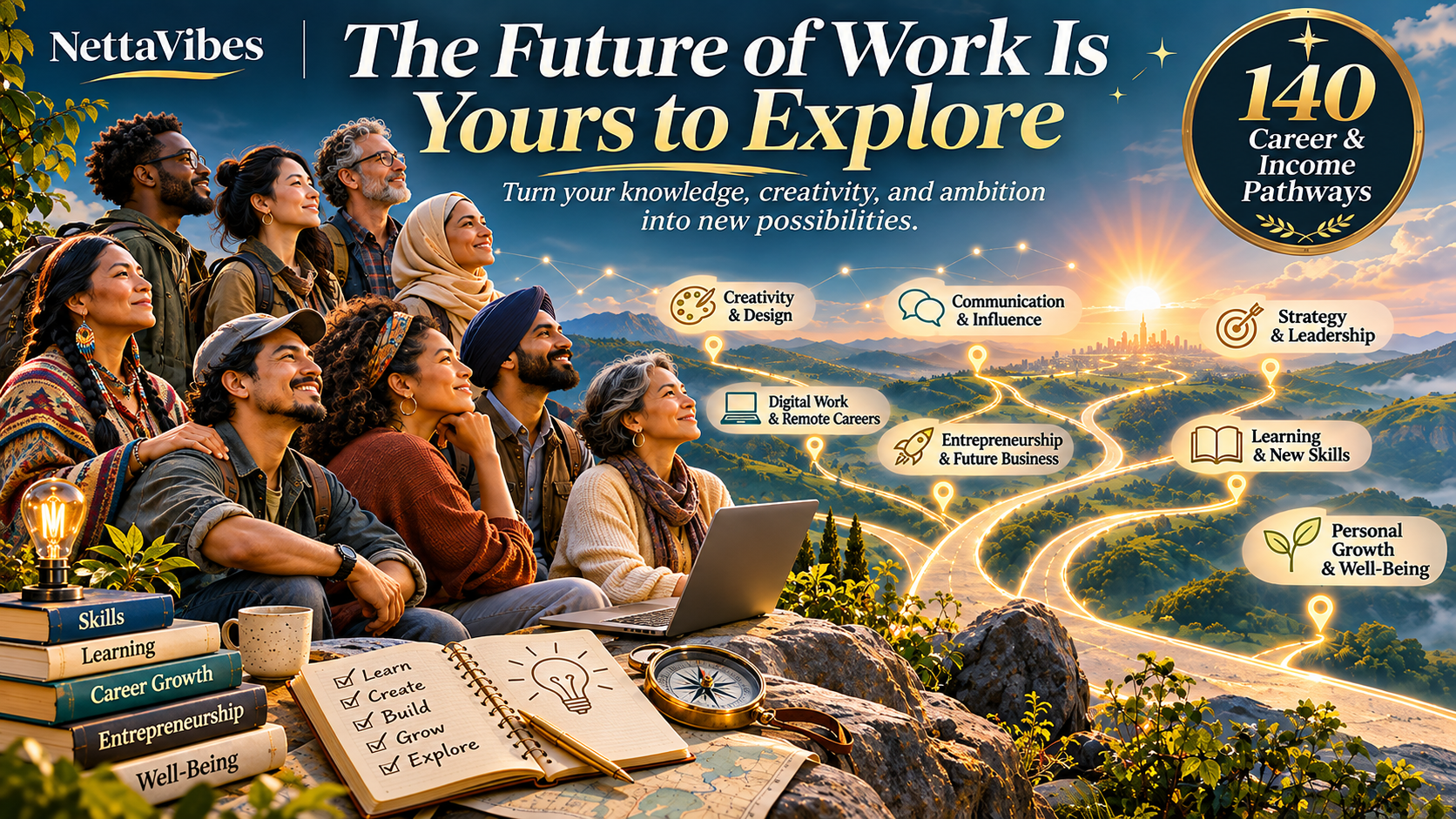
From career transitions and remote work to digital entrepreneurship and emerging AI opportunities, discover how to prepare for the changing workforce, build confidence, and create a more purposeful path toward financial independence.
Turn Your Skills Into Opportunity in the Age of AI
A thoughtful guide to AI-resilient careers, practical learning, personal growth, and the possibilities of earning income from what you know, what you care about, and what you can learn next.
Somewhere between the headlines about artificial intelligence and the pressure to keep up, a quieter question deserves our attention: What could I build from the abilities I already have? Maybe you are an experienced employee considering a new direction, a blogger who wants to make creative work more sustainable, a caregiver returning to paid work, or someone who has carried a business idea for years without knowing where to begin. Your path does not have to resemble anyone else’s.
Technology is changing the way tasks are completed. That is real. But a changing workplace does not mean your experiences, curiosity, compassion, or judgment are suddenly without value. It means those qualities may need to be paired with new tools, stronger evidence of your skills, and a clearer understanding of the problems people are willing to pay to solve.
This is the heart of The Human Work Revolution: replace the search for a perfectly safe job with a more empowering search for adaptable skills, meaningful work, and realistic opportunities. Nobody can guarantee that a career will be untouched by AI. You can, however, take steps to become more prepared, useful, and capable of choosing your next direction.
What the latest workforce research really tells us
There is no credible list of occupations that artificial intelligence can never affect. Jobs are made up of tasks, and technology may change some tasks without eliminating the entire role. An administrative professional might use automation to organize routine records while still coordinating people, handling exceptions, resolving problems, and ensuring that important details are correct.
The International Labour Organization’s 2026 analysis emphasizes that exposure to new technology is not the same thing as job loss. The skills people use—communication, project management, writing, financial judgment, problem-solving, and collaboration—help shape whether technological change leads to new opportunities.
The U.S. Bureau of Labor Statistics’ August 2026 projections anticipate overall employment growth of 3.5% from 2025 to 2035. They also identify demand associated with healthcare, scientific and technical services, data work, energy infrastructure, and a changing population. Those forecasts are useful signals, not promises about any individual job application or business idea.
Global estimates tell another side of the story. The World Economic Forum’s Future of Jobs Report 2025 projects 170 million roles created and 92 million displaced by major economic and technological changes by 2030. This is a model of global trends, not a count of confirmed vacancies. Its central lesson is that preparation and access to learning matter.
Your human advantage is a combination of skills
The most adaptable professionals are not necessarily the people who know the newest software first. Often, they are the people who can combine a practical specialty with sound judgment and a willingness to learn. Think of it as a personal skill stack: expertise + communication + technology literacy + accountability.
Knowledge that comes from real experience
Industry familiarity, lived experience, and a deeper understanding of customers or communities can help you notice problems that a generic output misses. Someone who knows how families navigate services, how a small shop serves its customers, or how a classroom supports different learners brings context to the work.
The ability to communicate and build trust
Listening, interviewing, explaining a difficult subject, mediating disagreements, and taking responsibility for decisions can make a service more valuable. Technology can assist with drafts or scheduling, but it does not remove the need for accountable human relationships.
Judgment that checks the result
AI-generated answers can contain mistakes, omissions, or invented information. Knowing how to verify a source, protect private information, recognize bias, and explain uncertainty is increasingly important—especially in health, finance, education, hiring, or other consequential work.
Practical digital confidence
You do not need to become a software engineer to benefit from technology. Learning spreadsheets, accessible design, online research, basic automation, content management, and responsible AI-assisted workflows may help you complete work more effectively. Choose tools that support a real task rather than collecting tools simply because they are popular.
Six directions where human skill still matters
These are not six guaranteed jobs. They are starting points for investigating labor-market demand, training requirements, and the kind of problems you would enjoy solving. Some roles require degrees, licenses, apprenticeships, or significant experience. Others have accessible entry points through supervised work, portfolio projects, or short courses.
1. Help people navigate important moments
Explore: nursing, allied health support, case coordination, community outreach, patient advocacy, and care administration.
First step: compare local job postings and entry requirements. For clinical roles, follow the required licensing and training route. Consider nonclinical support and coordination roles if you are beginning without credentials.
2. Make complicated information understandable
Explore: tutoring, workplace training, instructional support, accessibility assistance, and learning-content design.
First step: design one short, original lesson with a learning goal and a way to check understanding. Ask someone in the intended audience to review it.
3. Turn everyday confusion into clear systems
Explore: project coordination, process improvement, customer success, documentation, and quality assurance.
First step: document a safe, nonconfidential workflow, identify a bottleneck, and demonstrate a cleaner process. A simple before-and-after example can become portfolio evidence.
4. Help teams make informed decisions
Explore: data analysis, information security, software testing, responsible AI review, and technical support.
First step: practice with public data, verify your conclusions, and publish a short explanation of what the data can—and cannot—show.
5. Create work that understands an audience
Explore: research-informed writing, editing, brand strategy, audio storytelling, user research, and accessible content design.
First step: choose a real audience and build one sample that solves a problem. Show your sources, decision-making, revisions, and original contribution.
6. Build, maintain, and improve the world around us
Explore: energy-system installation, technical maintenance, repair, trades, and hands-on infrastructure support.
First step: research accredited training and apprenticeships. Check safety requirements, local demand, wages, and the physical realities of the work before committing.
Evidence of demand: the BLS projects 41.0% employment growth for nurse practitioners and 34.6% for data scientists from 2025–2035. These positions have very different education requirements, and their growth rates should not be interpreted as easy entry or individual job security. Review the occupation-by-occupation outlook before investing in training.
Four ways to make your next skill useful—and potentially valuable
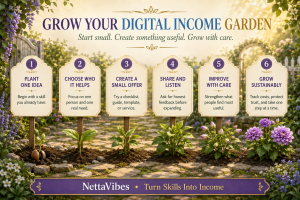
Not everyone needs to change careers to move forward. Sometimes the best next step is to improve your current work. Sometimes it is an apprenticeship, a freelance service, a new role, or a carefully tested digital product. The important shift is from “I need an entirely new identity” to “I can build evidence of something useful.”
Grow where you are
Choose a recurring problem at work: difficult handoffs, unclear documentation, repetitive reporting, or inconsistent customer messages. With appropriate permission, practice solving one part of it and record the result. Skills that improve quality and reduce confusion may strengthen your professional value.
Explore a new role
Read five real local job descriptions. Identify shared skills, credentials, tools, and experience. Compare that list with what you already know, then learn one missing competency through a reputable course or supervised experience.
Offer a small service
A creator might offer article editing or content organization. An operations-minded person might offer scheduling systems or documentation. Define a limited deliverable, confirm there is genuine demand, and be explicit about what you can and cannot provide.
Test a digital-business idea
A blogger could develop a focused resource, workshop, template, or guide around a problem readers repeatedly raise. Start with research and a small sample, invite feedback, and only expand when people show that the solution is helpful.
Three examples of a more purposeful beginning
The experienced office professional: Rather than abandoning years of administrative experience, they learn to organize digital documentation and responsibly review AI-assisted drafts. Their first portfolio item is a sample process guide using invented, not employer-confidential, information. That can support a conversation about operations, quality, or customer support roles.
The thoughtful blogger: Instead of publishing more posts without a plan, they interview readers, notice a recurring question, and develop one helpful free article plus a small paid resource or service. Their value comes from understanding the audience, original research, editorial judgment, and trust—not simply producing more text.
The person starting over: They review transferable strengths, use a free training resource, complete one project, and request feedback. Their first step may be a volunteer role, an apprenticeship inquiry, or an entry-level application. Progress counts even before a new income stream appears.
Work with AI without handing over your judgment
AI can help brainstorm an outline, summarize non-sensitive notes, compare possible workflows, or draft a practice project. But its output still requires human review. Check claims against original sources, obtain consent before using other people’s material, protect confidential information, and avoid presenting generated work as firsthand experience you do not have.
For bloggers and creators, that means keeping your own voice and editorial standards. For business owners, it means reviewing customer-facing content, intellectual-property concerns, and data handling. For career seekers, it means tailoring resumes truthfully and verifying job listings rather than trusting automated claims. The aim is not to use the most AI. It is to produce responsible, useful results.
A realistic 30-day opportunity-building plan
This is a learning experiment—not a promise of employment or income in 30 days. Give yourself permission to discover whether a direction fits before paying for expensive training, subscriptions, or advertising.
Notice
Write down three strengths, three problems you enjoy solving, and three roles or service ideas worth researching. Check actual demand and requirements.
Learn
Choose one beginner resource. Practice an essential skill through a small, specific task, not endless tutorials.
Build
Create one original sample: a lesson, process guide, edited article, dataset explanation, prototype, or other appropriate work product.
Test
Ask two or three relevant people for useful feedback. Refine your sample and choose the next step: apply, study, volunteer, apprentice, or validate an offer.
To find suitable learning resources, visit the NettaVibes Opportunity Center or explore 40 free and accessible learning resources. Check each provider’s current enrollment and certificate terms, since some programs have paid options.
Before you invest money, ask better questions
Does this skill appear in current job listings? What proof of ability do employers or customers expect? Is a license legally required? Can you build a small demonstration before committing to a costly course? What would this work be like on an ordinary Tuesday, not just in a promotional video? Those questions protect your time, confidence, and resources.
Featured NettaVibes digital guide
Explore more possibilities. Choose your next step with intention.
The Human Work Revolution digital guide explores 100 detailed career profiles and 40 additional remote-career paths, alongside skill-building, personal-branding, and income-planning ideas, as described on its current product page.
It is intended to support exploration—not guarantee that any role is immune to automation or that any opportunity will produce income.
Questions to consider before changing direction
Are any jobs truly AI-proof?
No career can be guaranteed to remain untouched by technology or economic change. Focus on adaptable skills, verified demand, and work that fits your strengths and circumstances.
Do I need to learn to code to work alongside AI?
Not necessarily. Many roles benefit from communication, operations, writing, research, customer understanding, and responsible use of digital tools. Other paths—such as certain data or engineering jobs—require substantial technical training.
Can someone start over later in life?
Yes, career exploration is possible at different ages and experience levels. Transferable experience can be valuable, but barriers such as time, caregiving, access, credentials, and local hiring conditions are real. Choose a practical pathway based on your situation.
Can blogging or content creation become a business?
It can, but earning income is not automatic. Sustainable possibilities depend on a real audience need, quality work, trust, sound pricing, clear offers, and ongoing experimentation. A small service or resource is often a more realistic test than launching many products at once.
Where should I begin if I feel overwhelmed?
Start with one area, one trustworthy learning resource, and one small project. You do not need to master every platform or choose a permanent career in a single week.
Final thoughts: your experience is not obsolete
There is a difference between allowing change to inform your decisions and allowing it to decide your worth. The first can lead to curiosity, preparation, and new skills. The second can make the future feel smaller than it really is.
The purpose of exploring the future of work is not to convince everyone to become a programmer, launch a business, or use AI for everything. It is to widen the range of choices available to you. Perhaps your next chapter looks like a new occupation. Perhaps it looks like improving the work you already do. Perhaps it begins with a thoughtful article, a practice project, a class, a customer interview, or an idea you finally give yourself permission to explore.
Start where you are. Learn with purpose. Build proof of what you can do. Then take the next informed step. That is how work can become opportunity—without pretending that the future is simple or guaranteed.
Research & useful sources
- U.S. Bureau of Labor Statistics, Employment Projections: 2025–2035 (released August 27, 2026).
- U.S. Bureau of Labor Statistics, Fastest Growing Occupations (2025–2035 projections).
- International Labour Organization, From Exposure to Opportunity (2026).
- International Labour Organization, Generative AI and Jobs: Occupational Exposure (2025).
- World Economic Forum, Future of Jobs Report 2025 (2025–2030 outlook).
Kind words, real voices
Reviewed and approved by this community's moderators.
No published reviews yet. Your story could be the first.